

Diurnal regulation of SDG2 and JMJ14 by circadian clock oscillators orchestrates histone modification rhythms in Arabidopsis
Circadian rhythms modulate growth and development in all organisms through interlocking transcriptional-translational feedback loops. The transcriptional loop involves chromatin modifications of central circadian oscillators in mammals and plants. However, the molecular basis for rhythmic epigenetic modifications and circadian regulation is poorly understood.
Circadian clock genes promote diurnal regulation of SDG2 and JMJ14 expression, which in turn regulate rhythmic histone modification dynamics for the clock and its output genes. This reciprocal regulatory module between chromatin modifiers and circadian clock oscillators orchestrates diurnal gene expression that governs plant growth and development.
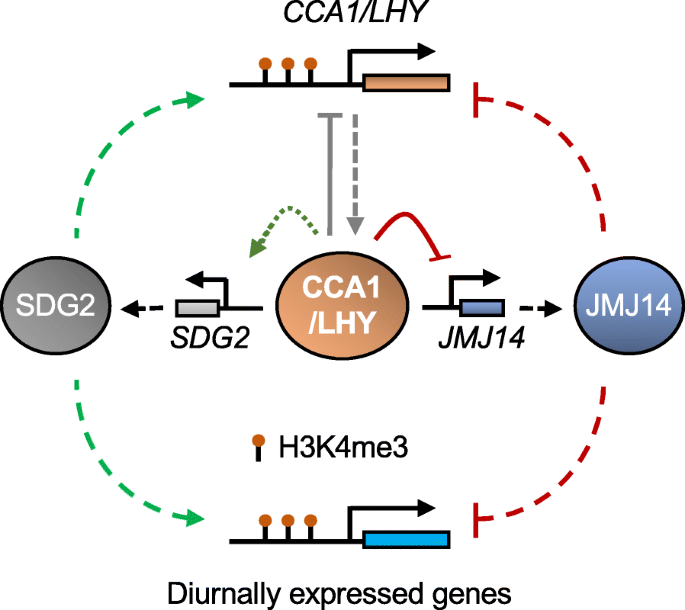
Further examination of additional histone marks will provide a comprehensive view for diurnal rhythms of histone modifications and gene expression.
How histone methyltransferases and histone demethylases are recruited to their target genes remains unknown.
It will be interesting to further test how specific transcription factors including circadian clock regulators recruit other histone methyltransferases and demethylases to establish rhythmic histone modifications that exert growth and developmental regulation in plants and animals.
 Common Design